
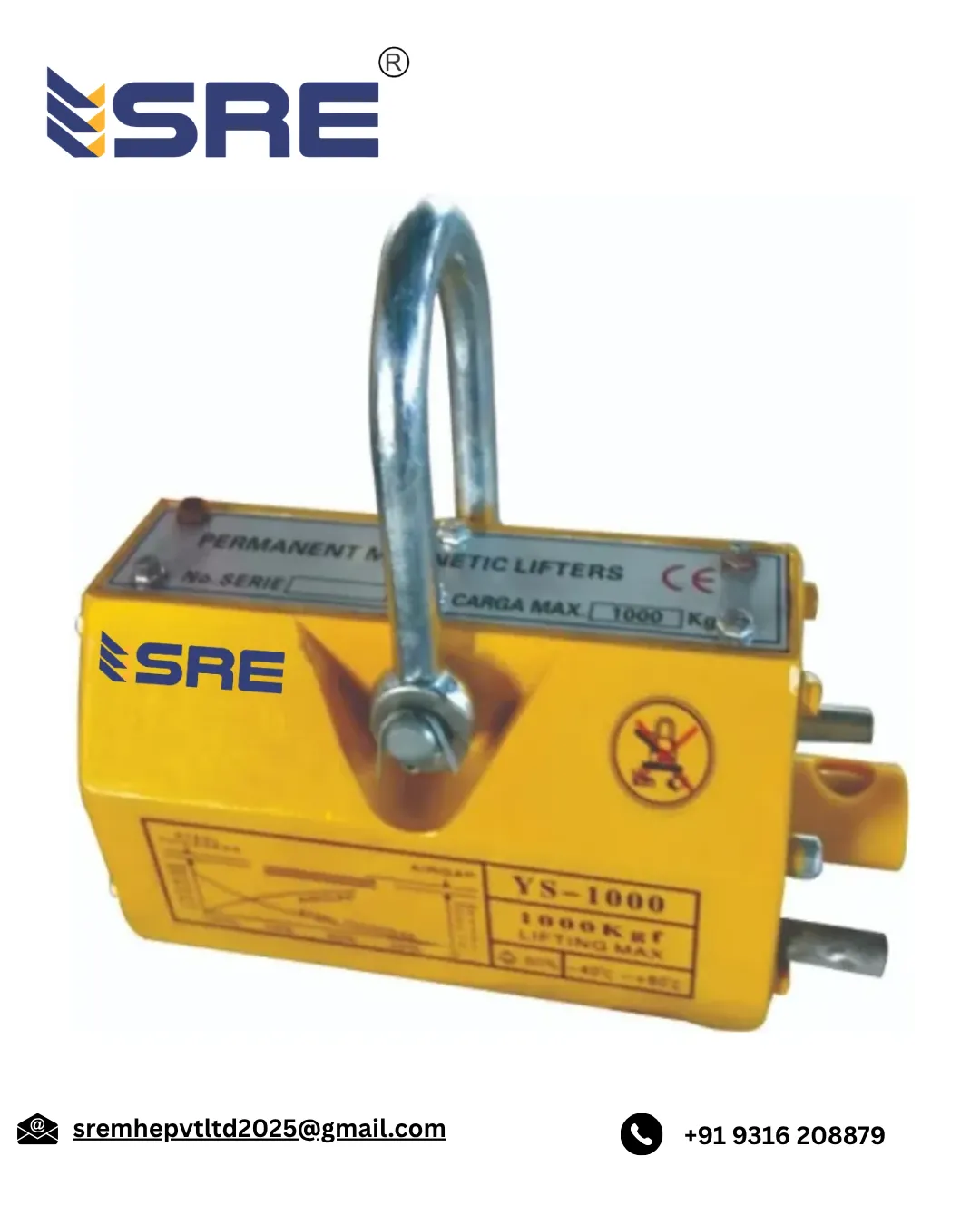
Steel plates, sheets, and round bars are heavy, and moving them by hand or with slings often takes time and creates safety risks.
A magnetic lifter solves this problem by using magnetic force instead of ropes, chains, or clamps to lift ferrous materials. Fabrication shops, steel stockyards, and logistics companies now use this equipment daily because it speeds up handling and reduces surface damage.
This guide explains what a magnetic lifter is, how it works, where it is used, and how to pick the right capacity for a job. It also covers safety rules, maintenance practices, and a comparison with traditional lifting methods.
What Is a Magnetic Lifter?
A magnetic lifter is a mechanical device that uses a magnetic field to grip and lift ferrous metal objects such as steel plates, sheets, blocks, and pipes. Instead of wrapping a sling around the load or drilling holes for hooks, an operator simply places the lifter on a flat, clean surface and activates the magnetic circuit.
Two broad categories exist: permanent magnetic lifters , which rely on rare-earth or ferrite magnets and need no external power, and electropermanent magnetic lifters, which use a short electrical pulse to switch the magnetic state on or off. Both types are attached to a crane hook, hoist, or overhead gantry, and both are rated for a specific safe working load.
Manufacturing plants, ports, and scrap yards rely on these lifters because they cut down handling time on repetitive lifting tasks. The device also reduces the physical strain that manual rigging places on workers.
How Does a Magnetic Lifter Work?
The working principle behind a magnetic lifter is fairly simple, though the internal magnetic circuit design determines its efficiency. A magnetic circuit is created inside the lifter body, and this circuit channels magnetic flux through the base plate and into the ferrous material below it.
How magnetic lifter works in practice can be broken into three steps:
- The lifter is placed flat on the metal surface, ensuring full contact between the base and the load.
- The operator engages the magnetic field, either by rotating a lever (in permanent types) or triggering an electrical pulse (in electropermanent types).
- Once the magnetic circuit closes through the load, the material is gripped tightly enough to be lifted, moved, and repositioned safely.
Permanent magnetic lifters use neodymium or ferrite magnets arranged so that rotating an internal handle switches the flux path either into the load or back within the lifter body, which releases the load. Electropermanent lifters combine a permanent magnet with a coil; a brief current pulse realigns the magnetic domains, and the magnet then holds its state without continuous power. This design means that even in a power failure, the load stays attached until the operator deliberately reverses the field.
Surface condition affects performance directly. Rust, paint, scale, or an air gap between the magnet and the plate reduces the effective lifting force, sometimes by 30 to 50 percent, so operators are trained to check surface contact before every lift.
Key Features of a Magnetic Lifter
Most industrial-grade lifters share a common set of features, though build quality and safety margins vary between manufacturers.
- Rated lifting capacity, usually specified in kilograms or tons (500 kg, 1 ton, 2 ton, and higher).
- Safety factor, typically 3:1 or higher, meaning the lifter is designed to hold three times its rated load before failure.
- Manual release lever or electric switch, depending on whether the unit is permanent or electropermanent.
- Compact, sealed housing that resists dust, oil, and moderate moisture in workshop environments.
- Warning labels and capacity markings, which are required under most industrial safety standards.
- Lifting eye or shackle point for direct attachment to a crane hook or chain block.
Because the magnetic field is generated internally, these units need no compressed air or hydraulic lines, which keeps the design simpler than vacuum or clamp-based alternatives.
Key Takeaways About Magnetic Lifters
- A magnetic lifter grips ferrous metal through a magnetic circuit rather than mechanical clamping.
- Permanent types need no electricity; electropermanent types need only a brief pulse to switch states.
- Surface flatness and cleanliness directly affect the safe working load.
- Every lifter carries a rated capacity and safety factor that must never be exceeded.
- Regular inspection and testing keep the equipment reliable over years of use.
Contact Us
Benefits of Using a Magnetic Lifter
Workshops that switch from slings and clamps to a magnetic lifter usually notice the difference within the first week of use. The load is attached and released in seconds, which shortens cycle time on repetitive plate-handling jobs.
Because there is no need to drill, weld, or clamp onto the material, the surface of the plate stays free of marks or holes. This matters for finished sheets, machined components, and any product where cosmetic damage would reduce its value.
Manual lifting and rigging often place strain on workers’ backs and hands. A magnetic lifter reduces that physical load since the operator no longer needs to loop chains under a plate or manually secure hooks.
Other practical benefits include:
- Faster load-turnover on cranes and hoists, which improves shop-floor throughput.
- Even weight distribution across the magnetic face, reducing the risk of the plate slipping to one side.
- Lower long-term equipment cost, since permanent magnetic units need almost no maintenance beyond periodic inspection.
- Compatibility with plates, sheets, pipes, and round bars of varying thickness, within the rated capacity.
Advantages and Disadvantages of Magnetic Lifters
Every lifting method involves trade-offs, and magnetic lifters are no exception. The table below summarises where they perform well and where alternative methods may be preferred.
| Aspect | Advantage | Disadvantage |
|---|---|---|
| Speed of operation | Attaches and releases in seconds | Not applicable in most cases |
| Surface protection | No drilling, welding, or clamp marks | Residual magnetism can attract loose metal debris |
| Material compatibility | Works well on flat ferrous steel | Ineffective on non-ferrous metals like aluminium or stainless steel (austenitic grades) |
| Power dependency | Permanent types work without electricity | Electropermanent types need a working power source for switching |
| Surface condition | Performs best on clean, flat plates | Rust, paint, or gaps reduce lifting force |
| Cost over time | Low maintenance once installed | Higher upfront cost than basic slings |
Understanding these trade-offs helps a buyer decide whether a magnetic lifter fits a specific job, or whether a mechanical clamp or vacuum lifter is a better match for the material involved.
Safety Guidelines for Using a Magnetic Lifter
Magnetic lifting is generally safer than manual rigging, but only when operators follow established procedures. The American Society of Mechanical Engineers sets requirements for lifting magnets under the ASME B30.20 standard, which covers marking, construction, installation, inspection, and safe operating limits, and both permanent and electric-rated lifting magnets fall under this compliance standard. Regulatory bodies such as OSHA also require rigging and lifting accessories to be marked with their safe working load, and custom lifting accessories are typically proof-tested to 125 percent of their rated load before being placed in service.
Basic safety practices for a magnetic lifter include:
- Check the plate surface for flatness, rust, and cleanliness before every lift.
- Never exceed the rated capacity printed on the lifter’s nameplate.
- Keep loose metal tools and debris away from an energised magnet, since they can be pulled toward it unexpectedly.
- Confirm the magnetic field is fully engaged before the crane takes up the load, and test with a small lift-and-hold before moving the plate.
- Inspect the release mechanism regularly, since a worn lever or faulty switch can cause an unintended drop.
- Keep bystanders out of the swing radius, in line with general rigging safety practice.
Operators should also remember that magnetic lifting is not appropriate for every steel type. Some stainless steel grades are only partially magnetic or not magnetic at all, so a lifter’s rated capacity may not apply to those materials.
Applications of Magnetic Lifters
Magnetic lifter for steel handling appears across several industries, largely because flat ferrous plates and sheets are common in manufacturing supply chains.
- Steel fabrication units, where plates are moved from stock racks to cutting and welding stations.
- Ports and scrap yards, where bulk ferrous scrap is loaded and unloaded using crane-mounted magnets.
- Shipbuilding, where large steel sheets need repeated repositioning during hull assembly.
- Automotive and machinery manufacturing, for handling sheet metal components on the production line.
- Warehousing and logistics, particularly for moving palletised steel stock without damaging packaging.
- Construction sites, where structural steel sections and plates are lifted into position.
A magnetic lifter for pipe handling is also common, though pipe lifting typically uses a curved or multi-pole magnet design suited to round surfaces rather than flat ones.
How to Choose the Right Magnetic Lifter?
Selecting the correct unit depends on more than just the weight of the load. A few factors decide whether a lifter will perform reliably on a specific job.
- Rated capacity should always exceed the actual load weight, with margin for the applied safety factor.
- Plate thickness matters because thin sheets may not carry enough magnetic flux to reach full rated capacity.
- Surface condition of the material affects how much force the magnet can generate; heavily rusted or painted plates need a de-rated capacity.
- Lift orientation, since some lifters are designed only for horizontal lifting and others allow limited tilting.
- Power availability, which determines whether a permanent or electropermanent design is more practical for the site.
- Certification and testing records, which confirm the unit has been proof-tested and inspected according to industry practice.
Buyers comparing options such as magnetic lifter 1 ton price against a 2-ton unit should also account for future workload, since underrated equipment gets replaced sooner than a unit purchased with growth in mind.
Magnetic Lifter Capacity and Types
Capacity ratings vary widely depending on the application, from small 300 kg units used in light fabrication to multi-ton lifters used in heavy plate handling. The table below outlines common capacity ranges and their typical use cases.
| Capacity Range | Typical Type | Common Use Case |
|---|---|---|
| 300 kg – 1000 kg | Permanent magnetic lifter | Light sheet metal, small workshop plates |
| 1 ton – 2 ton | Permanent / electropermanent | Mid-size steel plates, general fabrication |
| 3 ton – 5 ton | Heavy-duty permanent magnetic lifter | Structural plates, shipbuilding sections |
| 5 ton and above | Multi-magnet or electropermanent array | Heavy industrial plate stacks, scrap handling |
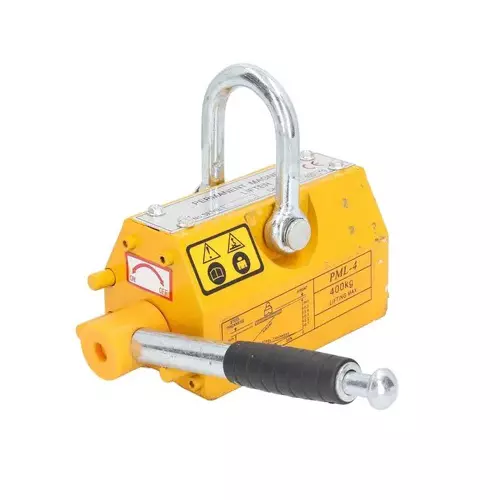
A permanent magnetic lifter 1000kg unit, for example, suits mid-scale fabrication shops that move moderate plate sizes daily, while units above 5 tons are generally reserved for structural or shipyard work where downtime for battery or power issues cannot be tolerated.
Magnetic Lifter vs Traditional Lifting Methods
Traditional lifting methods, such as chain slings, C-hooks, and plate clamps, remain common, but each comes with limitations that magnetic lifters address differently.
Chain slings require wrapping and unwrapping around every load, which takes time and depends on correct sling angle to avoid slippage. Plate clamps grip the edge of a sheet mechanically, which works well for single plates but struggles with stacked or irregularly shaped loads. Magnetic lifters, by comparison, attach to the flat top surface directly, so orientation and edge access are not a concern.
However, traditional methods still have a role. Clamps and slings work on non-ferrous metals, wet or oily plates, and situations where a power interruption to an electropermanent system would be a serious concern. In some cases, a combination approach, using a magnetic lifter for routine moves and a mechanical clamp for irregular loads, gives a shop the most flexibility.
Maintenance Tips for Magnetic Lifters
Magnetic lifters are relatively low-maintenance compared to hydraulic or pneumatic lifting tools, but a few habits extend their working life significantly.
- Clean the base plate after every shift to remove metal shavings, dust, and oil residue that reduce magnetic contact.
- Inspect the lifting eye, shackle, and release lever for wear or cracks before each use.
- Test the rated capacity periodically against a known load, particularly after any drop or impact.
- Store the lifter away from moisture and corrosive fumes when it is not in use.
- Keep the release mechanism lubricated where the manufacturer specifies, without letting lubricant reach the magnetic face.
- Schedule a formal inspection at intervals recommended by the manufacturer or applicable lifting equipment regulations.
Following a simple maintenance checklist reduces unplanned downtime and keeps the lifter operating at its rated capacity for years.
Why Choose a Quality Magnetic Lifter?
Build quality directly affects how consistently a magnetic lifter performs under repeated daily use. A well-manufactured unit holds its rated capacity over years of operation, while a poorly built one may lose magnetic strength or develop mechanical faults in the release lever.
SRE Material Handling Equipment Private Limited, formerly known as Shree Ram Enterprise, has worked in the material handling equipment sector since 2011 and is based in Vastral, Ahmedabad, Gujarat. The company is ISO 9001-2015 certified and has supplied more than 15,000 material handling equipment solutions, alongside pallet trucks, stackers, goods lifts, mobile floor cranes, scissor lifts, and other handling systems used across warehouses and factories. This background in engineering practical, precision-built handling equipment applies directly to how a magnetic lifter is designed, tested, and rated for daily industrial use.
Conclusion
A magnetic lifter offers a practical, damage-free way to move ferrous plates, sheets, and pipes across fabrication shops, ports, and construction sites. Choosing the right capacity, checking surface condition before every lift, and following basic safety and maintenance routines all determine how well the equipment performs over its working life. Whether the requirement is a small permanent unit for workshop use or a heavy-duty electropermanent lifter for shipyard plates, matching the lifter’s rated capacity to the actual job remains the most important buying decision.
Frequently Asked Questions
Q1. What is a magnetic lifter used for?
- A magnetic lifter is used to lift and move ferrous metal materials, mainly steel plates, sheets, and pipes, by generating a magnetic field that grips the material without slings, hooks, or clamps.
Q2. How much weight can a magnetic lifter hold?
- Capacity depends on the model, ranging from around 300 kg for light-duty units to 5 tons or more for heavy-duty industrial lifters; the exact safe load is always printed on the equipment’s rated nameplate.
Q3. Is a magnetic lifter safe to use on rusty or painted steel?
- A magnetic lifter can still work on rusty or painted steel, but the effective lifting force drops because the coating creates an air gap; operators should reduce the load below rated capacity or clean the surface first.
Q4. Can a magnetic lifter lift stainless steel?
- Only some stainless steel grades respond to magnetic lifting, since austenitic stainless steels are largely non-magnetic; the material type must be checked before assuming a magnetic lifter will hold it safely.
Q5. What is the difference between a permanent and an electropermanent magnetic lifter?
- A permanent magnetic lifter uses a mechanical lever to redirect magnetic flux and needs no power source, while an electropermanent lifter uses a brief electrical pulse to switch its magnetic state and then holds the load without continuous power.
Q6. How often should a magnetic lifter be inspected?
- Most manufacturers and lifting equipment regulations recommend inspecting a magnetic lifter before each use or surface damage or wear, along with a more formal periodic inspection on a schedule set by the manufacturer or local safety regulations.
Contact Us