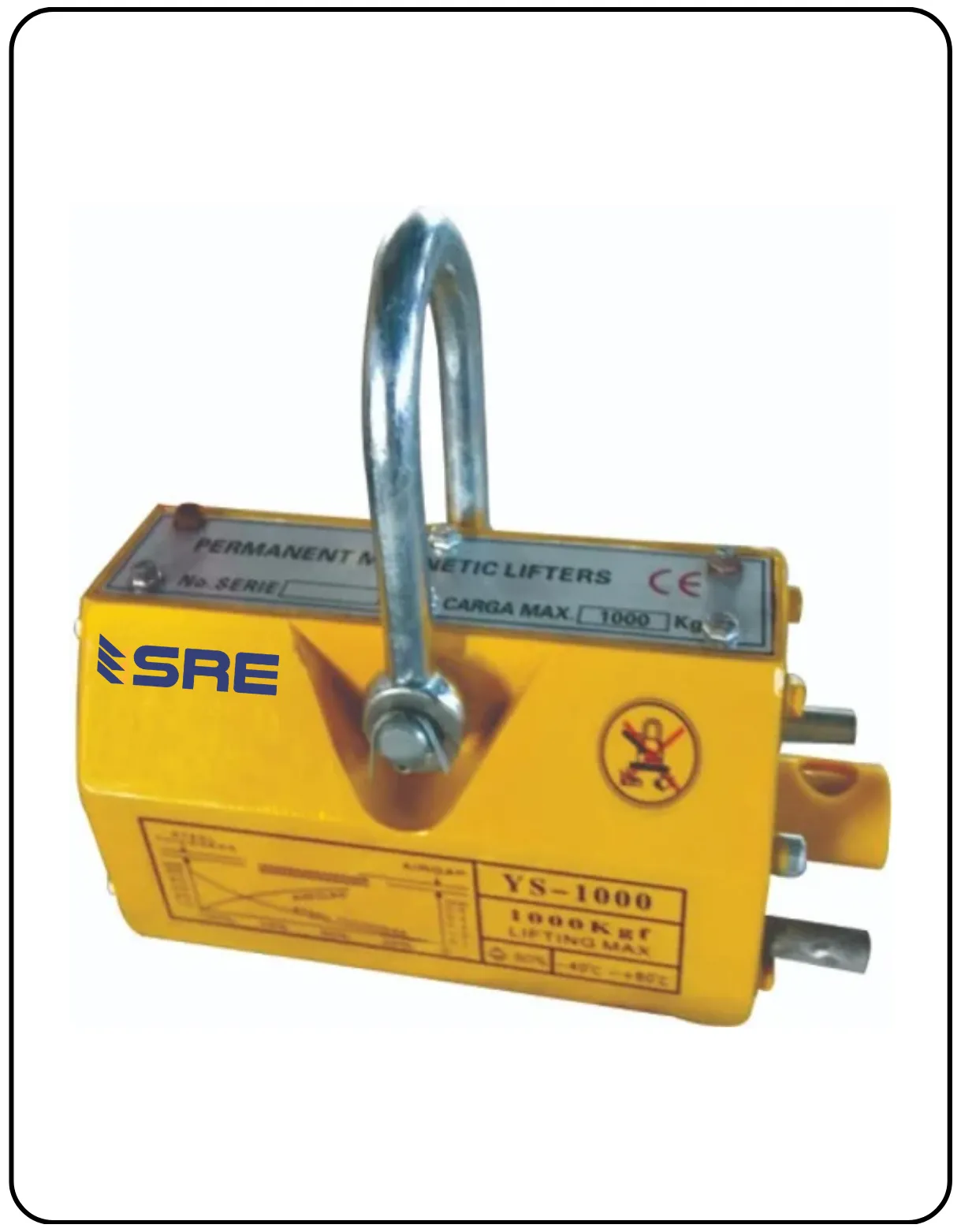
Industrial material handling has transformed significantly over the past decade. Warehouses are no longer simple storage spaces—they have evolved into dynamic, high-pressure environments that must move large volumes of materials with minimal delays, reduced errors, and improved safety standards. In this evolving landscape, the demand for a reliable Magnetic Lifter Manufacturer and Supplier has also increased to ensure faster, safer, and more efficient handling of heavy steel components.
The challenge is very real: teams are now working with heavier steel parts, tighter turnaround schedules, and a shrinking availability of skilled labor willing to handle physically demanding tasks. While manual lifting chains, fiber slings, and conventional clamps are still in use, they often introduce limitations that modern operations can no longer afford—such as human fatigue, inconsistent grip, slower attachment cycles, and increased safety risks.
This is where a Magnetic Lifter steps in — not as a luxury upgrade, but as a practical, dependable solution to a problem that floor managers deal with every shift.
Production floors, steel yards, fabrication workshops, and logistics hubs are all facing the same pressure: do more, do it faster, and do it without increasing your headcount or risk exposure.
Order volumes are rising. Equipment cycles are getting shorter. Safety audits are stricter. And the cost of a single workplace injury — financially and operationally — is higher than ever.
In daily warehouse operations, even a task as routine as repositioning a steel plate or loading a ferrous component onto a CNC machine can become a bottleneck when the lifting method is slow or requires multiple workers. Operations heads and factory managers have started paying close attention to where time and labor are actually being lost, and repetitive steel lifting tasks are consistently on that list.
A Magnetic Lifter — also called a permanent magnetic lifter or lifting magnet — is a material handling device that uses high-strength permanent magnets to securely attach to ferromagnetic materials (steel, iron, and related alloys) without requiring electricity, slings, chains, or manual clamping.
In practical terms: one operator positions the lifter on a steel workpiece, engages the handle to activate the magnetic field, and the crane or hoist can immediately lift and move the load. Releasing is equally simple. No re-rigging. No cable adjustments. No waiting.
Unlike electromagnets, permanent magnetic lifters don’t rely on a continuous power supply. The magnetic force is controlled purely by a lever mechanism, which makes them inherently fail-safe — the load stays secured even in the event of a power interruption.
Traditional rigging methods — chains, slings, and manual clamps — are workhorses. Nobody disputes that. But when you evaluate them honestly against the demands of a modern production environment, the gaps become clear.
Manual rigging takes time. Attaching a chain block or threading a sling around an awkward steel component can take 3–5 minutes per lift cycle. In a facility running 50–80 lifts per shift, that time adds up significantly.
Fatigue affects consistency. An experienced rigger at the start of a shift performs differently from the same person four hours in. Magnetic Lifters remove that variable — attachment is mechanical and consistent every single time.
Surface damage is a legitimate concern. Chains and clamps can mar machined surfaces, cosmetic steel sections, or precision components. Magnetic contact is flat, even, and leaves no marks.
Labor dependency creates scheduling risk. Skilled riggers are harder to find and retain. A Magnetic Lifter reduces the skill threshold required for safe, routine steel lifting — which means more of your workforce can operate the system confidently.
SRE Material Handling Equipment Private Limited manufactures a complete range of permanent magnetic lifters built for Indian industrial conditions — designed for consistent daily use, not just occasional lifts. All models carry a 3.5:1 safety factor, meaning each unit is tested at 3.5 times its rated capacity before release.
SRE-ML-100 — 100 kg Magnetic Lifter Designed for light fabrication environments, tool rooms, and handling small steel sections. Compact and easy to move between workstations, this model suits operations where frequent repositioning of lighter ferrous components is required. Ideal for machining shops and light engineering units.
SRE-ML-200 — 200 kg Magnetic Lifter A practical choice for sheet metal handling and medium-duty machining operations. The 200 kg model handles standard plate sizes commonly found in press shops and fabrication units without the need for a rigging crew.
SRE-ML-400 — 400 kg Magnetic Lifter Suited for structural steel handling, plate repositioning, and press shop loading. This capacity covers a wide range of day-to-day lifting needs in fabrication workshops and steel processing facilities.
SRE-ML-600 — 600 kg Magnetic Lifter Built for heavier fabrication demands and steel service centre operations. The 600 kg model handles thicker plates and larger structural sections while remaining manageable for a single trained operator working with a crane or hoist.
SRE-ML-1000 — 1000 kg Magnetic Lifter A reliable workhorse for heavy steel plate handling, large forging operations, and shipbuilding yards. At this capacity, the efficiency gains over traditional rigging become especially significant — fewer workers, faster cycles, and consistent attachment on every lift.
SRE-ML-2000 — 2000 kg Magnetic Lifter Designed for demanding environments such as rolling mills, steel yards, and large structural fabrication. The 2000 kg model handles substantial plate sections and heavy ferrous stock that would otherwise require complex rigging setups and multiple operators.
SRE-ML-3000 — 3000 kg Magnetic Lifter For heavy industrial applications where large steel sections, thick plates, or bulk ferrous material need to be moved reliably and repeatedly. Commonly specified in port handling operations and heavy engineering plants where downtime is costly.
SRE-ML-5000 — 5000 kg Magnetic Lifter The highest capacity model in the SRE range, the 5000 kg heavy-duty magnetic lifter is built for the most demanding environments — large plate yards, heavy steel processing lines, and bulk ferrous material handling where no conventional rigging solution offers comparable efficiency or safety.
All models operate on permanent magnet technology — no power source required. Rated capacities apply to flat, clean, dry ferromagnetic surfaces. Capacity is reduced for curved surfaces, coated materials, or laminated steel. Always verify workpiece compatibility before each lift.
The reliability of a Magnetic Lifter comes from the simplicity of its operating principle. There are no coils to burn out, no hydraulic lines to leak, and no batteries to charge. The permanent magnet circuit is either engaged or disengaged through a lever-controlled rotor mechanism.
This matters for uptime. In environments where equipment sits on the dock waiting for maintenance, even a brief unplanned stoppage has downstream consequences. Permanent magnetic lifters have virtually no wear-related failure modes in the magnet system itself — routine maintenance is limited to keeping the contact surface clean and inspecting the housing and handle mechanism periodically.
For operations running multiple shifts, this kind of reliability is not a minor point. It’s the reason many plant engineers specifically specify permanent magnetic lifters over electromagnetic alternatives for routine daily lifting.
The upfront cost of a Magnetic Lifter is predictable. What’s harder to quantify — until you’ve tracked it — is the cost of not using one.
Consider the cumulative cost of rigging time across a full year of operations. Then factor in the ergonomic injury risk to workers performing repetitive heavy lifting and repositioning tasks. A single lost-time injury can cost an organisation more than a year’s worth of magnetic lifter units, when you account for compensation, replacement training, and productivity loss.
Magnetic lifters for industrial steel handling also reduce dependency on multiple operators for tasks that one person can safely manage — freeing up labor for higher-value work elsewhere in the facility. Maintenance costs are low and predictable. There are no consumables to replace, and with basic care, a well-built permanent magnetic lifter from a reputable manufacturer will remain in service for many years.
SRE supplies and supports magnetic lifter installations across major industrial belts in Maharashtra and beyond. If your facility is located in the Pune region, you can explore our dedicated support for Magnet Lifter in Pune. For facilities in and around the Mumbai industrial corridor, visit our page for Magnet Lifter in Mumbai. Operations based in Nashik’s growing manufacturing zone can find region-specific information on Magnet Lifter in Nashik.
One of the practical advantages of permanent magnetic lifters is how quickly operators become comfortable using them. The operating mechanism — a handle that rotates to engage or disengage the magnet — is intuitive. Most operators are confident with the device after a single supervised session.
There are no complex control panels, no calibration requirements, and no programming. The daily pre-use check is straightforward: confirm the contact face is clean and free of debris, inspect the housing for visible damage, and verify the handle engages and releases cleanly.
Periodic maintenance involves cleaning the contact face, inspecting load suspension points, and checking the lever mechanism for smooth operation. This is work most in-house maintenance teams can perform without specialist support — keeping the equipment running without scheduled service calls or extended downtime.
Not all magnetic lifters perform the same in real operating conditions. The quality of the permanent magnet material, the precision of the rotor mechanism, the construction of the housing, and the accuracy of the safety rating all determine whether the unit performs as specified over its service life.
When evaluating suppliers, procurement teams and safety officers should look for verified safety factors with test documentation, clear rated capacity specifications that honestly account for surface and material variables, compliance with relevant BIS or international standards, and after-sales support availability including replacement parts and technical guidance.
A manufacturer with genuine experience in material handling equipment will be transparent about capacity limitations, surface requirements, and proper operating conditions. That transparency is a more reliable indicator of quality than any marketing claim.
SRE Material Handling Equipment Private Limited has built its product range on this principle — practical equipment designed for the real conditions found in Indian factories, warehouses, and fabrication shops.
A Magnetic Lifter is not a complicated piece of equipment, and it shouldn’t be oversold as one. It does a specific job — securely lifting ferromagnetic materials — and it does it more consistently, safely, and efficiently than most traditional alternatives.
For operations managers trying to improve throughput, reduce rigging time, lower injury exposure, and bring more predictability to their steel handling workflow, a magnetic lifter is a straightforward, well-proven solution.
To discuss your specific requirements or get a recommendation for the right capacity model, contact the SRE team today — we’re here to help you find the right fit for your facility.
Have more questions? Get in touch with our team and we’ll be happy to assist.
#MagneticLifter #SREMaterialHandling #PermanentMagneticLifter #SteelPlateHandling #LiftingMagnet #MagneticLifterForSteelPlates #IndustrialSteelHandling #HeavyDutyMagneticLifter #MaterialHandlingEquipment #IndustrialLifting #WarehouseSafety #FactoryEquipment #MadeInIndia #IndustrialSafety #ProcurementIndia #OperationsManagement #SupplyChainIndia #FabricationShop #SteelYard #SREEquipment

WhatsApp us